
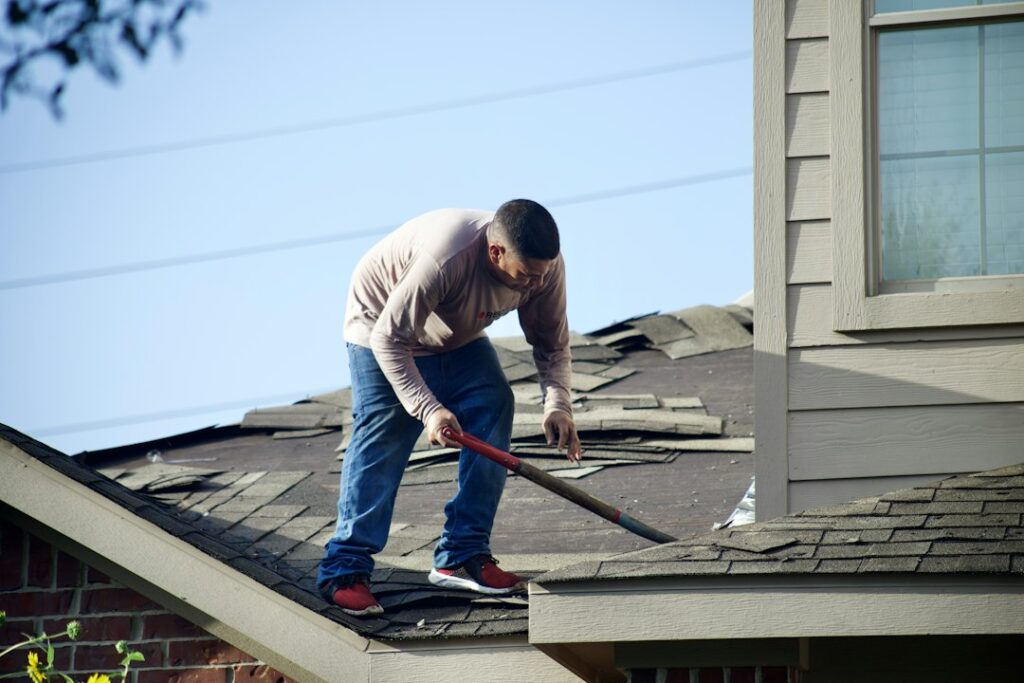
Roof cleaning can remove leaves, moss, algae, and other buildup, but the work becomes dangerous quickly when surfaces are wet, steep, icy, or reached by an unstable ladder. For many households, the safest approach is to inspect the roof from the ground, clean only areas that can be reached securely, and avoid walking on the roof unless proper fall protection and equipment are available.
What should be removed from a roof?
Most roof cleaning involves clearing loose debris and controlling biological growth rather than making the shingles look new. Common materials include:
- Fallen leaves and small branches
- Pine needles and seed pods
- Moss, algae, and lichen
- Dirt washed down from nearby trees
- Debris collecting behind chimneys, vents, or roof valleys
- Ice-dam-related residue or clogged gutter material
In Freeville, NY, seasonal leaf fall, wet spring conditions, summer humidity, and repeated freeze-thaw cycles can leave roofs damp for extended periods. Shaded roof sections are especially likely to hold moisture, allowing moss and algae to spread.
A small amount of discoloration does not always mean the roof is failing. Dark streaks may be algae, while raised green patches are more likely moss. Lichen can attach tightly to shingle surfaces and may require more cautious treatment.
Is it safe to walk on a roof to clean it?
Walking on a roof is not automatically safe, even when the slope appears gentle. Asphalt shingles can become slippery from dew, algae, frost, or cleaning solution. Granules may also be loosened by foot traffic, and stepping in the wrong location can damage flashing, vents, ridge caps, or brittle shingles.
Avoid roof access when:
- The roof is wet, frosted, icy, or covered with snow
- Wind makes ladder placement or balance uncertain
- The roof is steep, damaged, sagging, or difficult to see clearly
- There are skylights, fragile coverings, loose shingles, or exposed openings
- The person doing the work lacks fall-protection training
- The only available ladder is too short, damaged, or placed on uneven ground
A roof more than a few feet above the ground presents a serious fall hazard. A household ladder is intended for access, not as a substitute for a stable work platform or fall-protection system. If safe access cannot be established from the ground or from a properly supported platform, the cleaning should not proceed as a do-it-yourself roof task.
What is the safest way to clean a roof from the ground?
For light debris, use a roof rake or soft-bristled extension tool designed for the roof material. Work from the edge upward only as far as the tool can reach without pulling forcefully against the shingles. Use gentle strokes and avoid scraping across the surface.
A telescoping tool can help remove leaves from low-slope sections, but it should not be used aggressively. Pulling hard on a stuck branch can shift shingles or damage flashing. Never stand directly below a person working above, because falling debris, tools, and cleaning solution can cause injury.
Gutters should be checked after roof debris is removed. Leaves and moss often wash into the gutter system, where they can block downspouts. Use a stable ladder on firm, level ground, keep both hands available when climbing, and avoid leaning sideways from the ladder. If the gutter cannot be reached without overextending, move the ladder rather than stretching.
Should a pressure washer be used on shingles?
Pressure washing is generally a poor choice for asphalt shingles. High-pressure water can remove protective granules, drive water beneath shingles, damage flashing, and force moisture into roof and wall assemblies. It can also spread loosened algae and debris onto siding, windows, decks, and planted areas.
A garden hose may be suitable for gently rinsing certain surfaces, but water should not be directed upward beneath shingle edges, vents, flashing, or siding. Metal roofing, slate, wood shakes, and other materials have different cleaning limitations, so the roof covering should be identified before any wet cleaning begins.
Do not use a stiff wire brush, scraper, abrasive pad, or shovel on shingles. These tools can remove surface material and shorten the roof’s service life.
What cleaning solution is appropriate?
For moss or algae, use only a roof-compatible cleaner and follow its label exactly. The label should specify the roof materials it can be used on, dilution instructions, contact time, rinsing requirements, and precautions for plants and painted surfaces.
Never mix bleach with ammonia, acids, toilet-bowl cleaners, or other household chemicals. Dangerous chlorine-containing gases can form from incompatible mixtures. Store cleaning products in their original containers and keep children and pets away from the work area.
Before applying any solution:
- Protect or pre-wet nearby plants according to the product instructions
- Close windows and doors on the affected side of the house
- Cover sensitive outdoor materials if the label recommends it
- Redirect downspouts when necessary to prevent concentrated runoff
- Check the forecast for rain, wind, and freezing temperatures
- Test a small, inconspicuous area first

Avoid cleaning during hot, sunny conditions if the solution will dry before the required contact time. Also avoid freezing weather, since water and runoff can create slippery surfaces and refreeze on walkways.
How should moss be removed without damaging shingles?
Moss should not be ripped off in large pieces. Its attachment can pull away shingle granules and expose the underlying mat. A compatible treatment may loosen the growth over time, after which dead material can sometimes be removed gently from the ground or with a soft tool.
Do not expect every stain to disappear immediately. Algae discoloration may fade gradually after treatment, while moss can take longer to dry and detach. Repeated forceful cleaning is more damaging than allowing a properly applied treatment to work slowly.
If moss has lifted shingle edges, blocked drainage channels, or grown around flashing, the condition is no longer just cosmetic. Water may be able to move beneath the roofing material, particularly during heavy rain or snowmelt.
What should be checked after cleaning?
Inspect the roof from the ground and examine the attic, if safely accessible, for signs of moisture. Look for:
- Missing, cracked, curled, or lifted shingles
- Rusted or separated flashing
- Sagging roof sections
- Damp insulation or dark roof sheathing
- Water stains near chimneys, vents, and ceiling penetrations
- Gutter overflow or disconnected downspouts
- Moss returning rapidly in the same location
In the local climate, roof drainage matters during rain, spring snowmelt, and freeze-thaw periods. Leaves that remain in valleys or gutters can hold moisture against roofing materials and contribute to ice buildup when temperatures fall.
When should roof cleaning stop?
Stop immediately if a ladder shifts, the roof becomes slippery, wind increases, runoff reaches electrical equipment, or shingles begin shedding unusually large amounts of granules. Work should also stop if the roof’s condition cannot be evaluated confidently from a safe position.
Cleaning is not a substitute for roof repair. A roof with widespread moss, active leaks, structural sagging, fragile shingles, or difficult access may present hazards that household tools cannot safely address. Fall protection must be designed for the specific roof, anchor points, slope, and task; a rope tied to an improvised object is not a reliable safety system.
For most homes, safe roof care begins with ground-level inspection, gentle debris removal, clean gutters, and prompt attention to drainage problems. The goal is not to make every roof look spotless. It is to remove conditions that hold moisture while avoiding damage to the roof and unnecessary exposure to falls.
